[Note: A little bit about gestational diabetes. Gestational diabetes is the manifestation of glucose intolerance for the first time during pregnancy. The glucose intolerance results from hormones released by the placenta, which makes insulin less effective in processing glucose. This resuls in higher blood glucose levels. Most women are able to produce sufficient extra insulin to compensate for the increased insulin-resistance. But for women like me, that doesn't happen. We simply cannot produce enough insulin our bodies need. This extra glucose floats around our bodies and enters our babies' bloodstreams. The babies respond by producing extra insulin, storing the extra glucose as fat. Failure to control glucose levels can lead to serious consequences, such as macrosomia (very large babies), death in-utero of the baby, and dangerously high blood pressure for the mother. In the long-run, both mother and child are at higher risk of developing Type 2 diabetes. Because of the severe risks involved, it is critical for the mother to keep her blood glucose under control. This is usually done via exercise, diet and as a last resort, insulin therapy. Typically, the glucose intolerance gets worse as the pregnancy progresses because the placenta gets larger and more insulin inhibiting hormones are released.]
Despite my insulin therapy, I have continued to find it a challenge to manage my glucose levels.
Teochew Fish Porridge has always been my 'safe' go-to food to cope with gestational diabetes. It is low in calories and full of brain building fish for the baby. During my first two pregnancies, when I was working full-time and lunching at the food court, it would often be the only thing I would have for days on end. Perhaps alternating with Yong Tau Foo. I did not mind too much as I love fish porridge and fish soup.
Last week, my diet was thrown into disarray. And it wasn't because of Christmas. Unfortunately, my body now cannot tolerate white rice, and even fish porridge, which doesn't have very much rice in it, has caused my blood glucose levels to spike to unacceptable levels. My go-to food is now on my list of 'Banned Foods'. It was very depressing. But this is typical of gestational diabtetes, as glucose intolerance increases as the pregnancy progresses. It is like a moving goal post. One week white bread is OK. The next week, it's a no-no. One week white rice is OK, the next it's not. Each week, more and more foods get put on my banned foods list. As of yesterday, only wholegrain bread, whole wheat pasta and brown rice (in small amounts) are safe for me.
I am going to have either a wholegrain sandwich or wholewheat pasta for lunch. Maybe I'll discover that these are off the list too. My doctor may continue to increase my insulin dosage, but the cruelty of insulin therapy, is that the insulin makes me even hungrier...too much insulin, and I could end up with higher glucose levels because I'm eating too much! But if I don't eat, then I might lose weight (insufficient weight gain is something I've always struggled with during pregnancy).
Fortunately, Baby is already 38 weeks. I only have about two weeks (probably less, as I usually deliver around 39 weeks) left of this craziness. I suppose if I can't eat anymore carbs, I will just eat eggs, dairy, meat and lettuce in the final stretch.


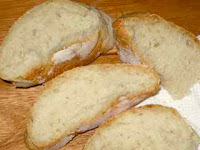 Finally! A recipe that works! Jamie Oliver saves the day. A wonderfully easy
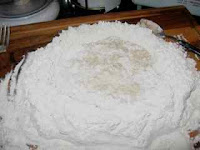
  You start by dumping all the flour onto your work surface and make a big well in it, like a volcano.
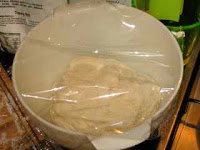 You add the yeast and water mixture and slowly mix it with some flour till it looks like stodgy porridge. Then you add the rest of the water and mix.


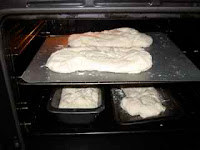
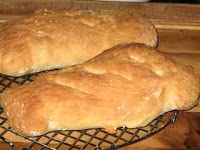 Finally, it's time to bake the bread.
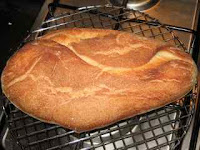 So after my two failures with Nigella's recipe. I decided I needed some proper instruction. But of course, I don't have the time to go for a bread making course. Instead, I googled. I found a cool website, called "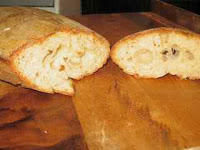
 I finally mustered the courage to bake my very first loaf of bread. Properly. Without a bread machine or even the dough hook on my Kenwood Chef. Just good old fashioned mixing and kneading and proofing and bashing and shaping and rising and baking...

 My mother, who has made bread before, happened to be visiting that day. She took a look at my dough and told me straight away that it needed more water. I had no clue. I though kneading it would help to soften it. But I kneaded, and kneaded, and kneaded, for almost an hour (it's supposed to take only 10 or 15mins) and still the dough was tough! Needless to say, my dough didn't rise. It was hard and tough.



 Posts
Posts